Finance tarot reading
Three cards: Past · Present · Future — reflect money habits, not lottery numbers or stock prices.
Finance tarot on Melaap uses the Past – Present – Future three-card spread to reflect your money patterns: habits formed earlier, current cash-flow energy, and the trend if spending and decisions stay the same. Finance tarot does not predict lottery wins or stock prices — it mirrors attitude, scarcity fear, or tendencies toward saving and skill investment. Many search “money tarot” or “finance tarot free” when stressed at month-end or before loans/investments — this page guides behavior questions instead of rich-or-poor fate. Better than “Will I be rich?” ask “Should I prioritize saving or upskilling this month?” or “Which habit is leaking my budget?”. Melaap is free, no popups, tool at the top. Pair the reading with real budgeting, bank statements, and professional advice for healthy decisions you can act on this week.
Spread layout
Past · Present · FutureA classic three-card timeline spread around your question.
1.Past

What has already unfolded — context or old patterns still in play.
2.Present
The heart of the question — where you stand and need to look clearly.
3.Future
Energy forming ahead — not fixed fate, but direction if the present rhythm holds.
Draw in position order using the tool above — each card is interpreted for its slot in this layout.
Three cards and personal cash flow
The Past card often points to financial patterns: family taught saving or spending freely, scarcity experiences, or old investment choices still shaping psychology. Naming the pattern helps you avoid emotional repeats (revenge spending, avoiding the books).
Present reflects live financial pressure: stability, stress, side-income opportunity, or debt to address. Read it as an energy snapshot — not a bank statement.
Future is the trend if habits stay the same. If the card suggests discipline, translate it into small actions: auto-save, subscription audit, or a 48-hour impulse delay.
Finance questions that fit tarot
Ask about attitude and behavior: “What am I avoiding about money?”, “Should I prioritize debt or skill investment?”, “What would help me feel financially safer?”.
Avoid exact amounts, lottery dates, or “will stock X rise” — tarot does not replace investment analysis. For major moves (home, loans), always involve financial and legal advisors.
Finance tarot helps most when you are torn between saving and self-care spending — cards can clarify the real need behind the choice.
Finance tarot and numerology
Many people pair tarot with life path number for long-term energy trends — e.g. 8 with resource management, 2 with financial partnership. Melaap offers both; calculate your life path and compare with the three-card message.
Still, money decisions need real numbers: income, fixed costs, interest rates, emergency fund. Tarot and numerology are reflection layers — not a balance sheet.
After drawing, journal one feeling and one concrete financial action for the week — that turns interpretation into real change.
Money questions often come with anxiety — remember tarot does not replace your budget app; checking your bank alongside one card is still the healthiest habit.
Money habits and reflection
Finance tarot works when you are honest about emotion: shame over debt, scarcity fear, or guilt about “wasteful” spending. Cards may name what you avoid in the books.
A suggested ritual: draw three cards at month start (this page), reconcile with actual spending at month end — tarot does not replace budget review, it adds a psychological angle.
If you are self-employed, combine the career page (five cards) and finance page (three cards) in the same week to separate “work” and “cash flow” energy.
Remember tarot does not replace accountants or investment advisors — but it can surface the emotion behind spending or avoiding your ledger, making practical action easier.
Common finance situations
End-of-month stress: ask “Which small habit reduces pressure now?” not “Will I have money next month?”.
Before a loan: ask “What am I avoiding about financial responsibility?” — then read the contract with legal or bank advice.
When investing in skills: three cards may reflect readiness and patience — the dollar amount still needs a real budget.
After drawing, open the life path page if you do not know your number — two reflection layers complement each other.
Three common finance situations
Situation one — month-end squeeze, money feels gone. Ask “Which habit is leaking this month’s budget?”. Past hints old spending patterns; Present mirrors real pressure; Future is trend if spending rhythm stays — not a balance forecast.
Situation two — big purchase (car, home, gear). Ask “What must I clarify before signing?”. Tarot does not replace financial advice — it mirrors fear, FOMO, or delay; pair with spreadsheets and real contracts.
Situation three — debt or loans, wanting relief. Ask “What small step eases money stress this week?”. Present often shows emotion around money; Future hints direction if the current payoff plan holds.
Featured cards for finance (Past · Present · Future)
Warm signals

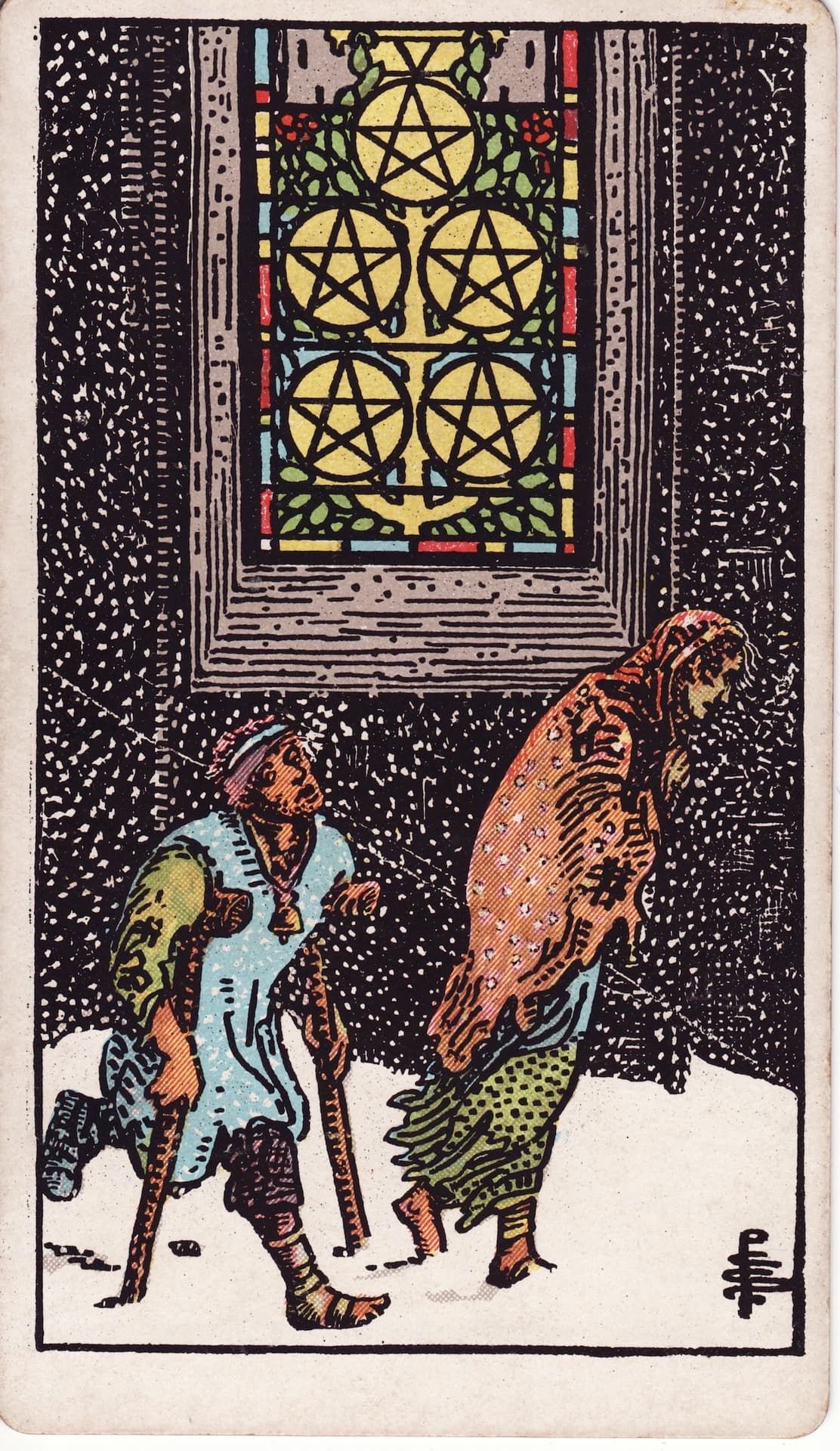
Four of Pentacles
In Present, upright suggests stability and intentional saving; reversed is clutching the wallet or fear of spending.

Nine of Pentacles
In Future, upright hints growing financial autonomy; reversed flags dependence or comparison.

Ace of Pentacles
In Present or Future, income or plan opportunity — needs a realistic base.

FAQ
Related articles
4 min
Financial Tarot Guide: Reading Money Destiny
Read tarot for money, resources and financial decisions.
5 min
How to Ask Tarot Questions Effectively: Love, Career, and Decisions
A library of tarot question templates organized by theme—love, career, and decision-making—to help you ask cards with clarity and purpose.
4 min
Asking Tarot Questions the Right Way
Your question determines 80% of the quality of a single reading.
4 min
Keeping a Tarot Journal: The Journaling Practice
Transform tarot from entertainment into a tool for personal development through reflective journaling.