Free love tarot reading
Three cards: You · Other · Connection — free, no popups, read through a relationship lens.
Love tarot is one of the most-searched topics — and the most misunderstood. It rarely answers “does he love me?” with a rigid yes or no, and it is not a tool for predicting a wedding date or a stranger's name. Instead, three cards in the You – Other – Connection spread reveal the energy of a relationship: your feelings and boundaries, the other person's energy (or what you project onto them), and the bond between you — potential, tension, or the next step. At Melaap, each card is read through a relationship lens — the same card is interpreted through emotion, communication, and boundaries rather than generic meaning. No sign-up, no popups, and the drawing tool always stays at the top of the page. Start with a specific question about feelings, boundaries, or the next step you want clarity on — the more specific, the more useful the reading.
Spread layout
Love three-cardThree relationship positions: you, the other person's energy, and the bond between you.
1.You

Your feelings, needs, and boundaries in this connection.
2.The other
The other person's energy or stance — or what you project onto them.
3.Connection
The bond between you — potential, tension, or the next step.
Draw in position order using the tool above — each card is interpreted for its slot in this layout.
Three love spreads on Melaap
Each page has its own spread and question angle — pick the intent that fits instead of redrawing the same question.
Love
You · Other · Connection
Current page
Love three-card
1.You
2.The other
3.Connection
Compatibility
Values · Communication · Long-term
View page →
Love compatibility
1.Values
2.Communication
3.Long-term
Healing
Wound · Release · Path forward
View page →
Love healing
1.The wound
2.Release
3.Path forward
How to read the three-card love spread
The You – Other – Connection spread uses three relationship-focused positions. The first card (You) shows your feelings, needs, and boundaries in this connection — not to blame yourself, but to notice what you bring into the bond.
The middle card (The other) reflects the other person's energy or stance — or what you project onto them. This position is often misunderstood: tarot does not read someone's private thoughts, but how you experience them. When this card is reversed, it often signals something unspoken or distance not yet acknowledged.
The final card (Connection) is the bond between you — potential, tension, or the next step. It is a trend, not fate: change your actions or communication and the outcome shifts. This is why tarot is valuable: it offers a chance to choose again, not a verdict.
Love questions to ask and to avoid
Good questions focus on you and your actions: “What should I pay attention to in this relationship?”, “What is blocking closeness between us?”, “Do I need boundaries or more openness?”. These yield clear readings because they place you where you can act.
Avoid questions that hand everything to fate: “When will I marry?”, “What is their name?”, “Will they definitely come back?”. Tarot is not a detailed oracle, and these tend to foster dependence rather than agency.
If you are hurting after a breakup, ask about healing before reunion: “What do I need for peace right now?” is often more useful than “Will we get back together?”.
Two more love spreads on Melaap
If your question is “are we compatible?”, try the Compatibility spread: Values · Communication · Long-term — three positions for shared ground, how you talk, and the trend if you keep today's rhythm.
After a breakup or when you are hurting, try the Healing spread: Wound · Release · Path forward — what needs healing, what to let go, and a possible next step.
All three spreads use the relationship (love) lens and are free on Melaap. Pick the spread that matches your question instead of redrawing the same question repeatedly.
How love tarot differs from ordinary fortune-telling
Old-style love fortune-telling often issues absolute claims and pressure (“you must perform a ritual”). Melaap goes the opposite way: tarot as a psychological reflection tool, closer to image-association in Jungian psychology than prophecy.
So you will find no countdown timers, no “only 2 slots left”, no data-capture popups. Just the cards, context-aware interpretation, and prompts for you to reflect on or discuss with someone you trust.
To go deeper, read each card's meaning in the 78-card library, or see the guides on asking questions and reading reversals in the Learn Tarot section.
One important point: love tarot works best when you use it to understand yourself, not to control someone else. The cards may reveal that you fear abandonment, that you are holding on too tightly, or that you are growing in how you love. That is what you can actually change. When you understand your own needs and boundaries clearly, every relationship — whether it continues or ends — becomes healthier and more honest.
Three common love situations
Situation one — a crush you have not confessed. Skip “do they like me?”; draw with “What should I pay attention to if I want to move closer?”. You shows what you fear — rejection, pride, or rushing; The other mirrors what you sense from them (not their private thoughts); Connection hints the trend if nothing changes — a gentle step forward, more waiting, or an honest talk first.
Situation two — together but struggling. Ask “What is blocking closeness between us?”. You often points to unspoken needs or boundaries; The other may reflect distance you feel; Connection shows the shared dynamic — poor communication, mismatched expectations, or a need to repair. Read all three as one story, not one card as “definitely over”.
Situation three — after a breakup, wanting clarity about your feelings. This page still works if the question is about you, not your ex: “What am I carrying into this memory?”. If the focus is healing or release, switch to the healing or breakup page — same love family, tighter guidance. After each situation, note one small action within 48 hours — a text, a day of rest, or a real conversation.
Featured cards for love questions (You · Other · Connection)
Warm signals

The Lovers
In Connection, upright signals a heart-led choice and alignment; reversed warns unspoken value conflict.
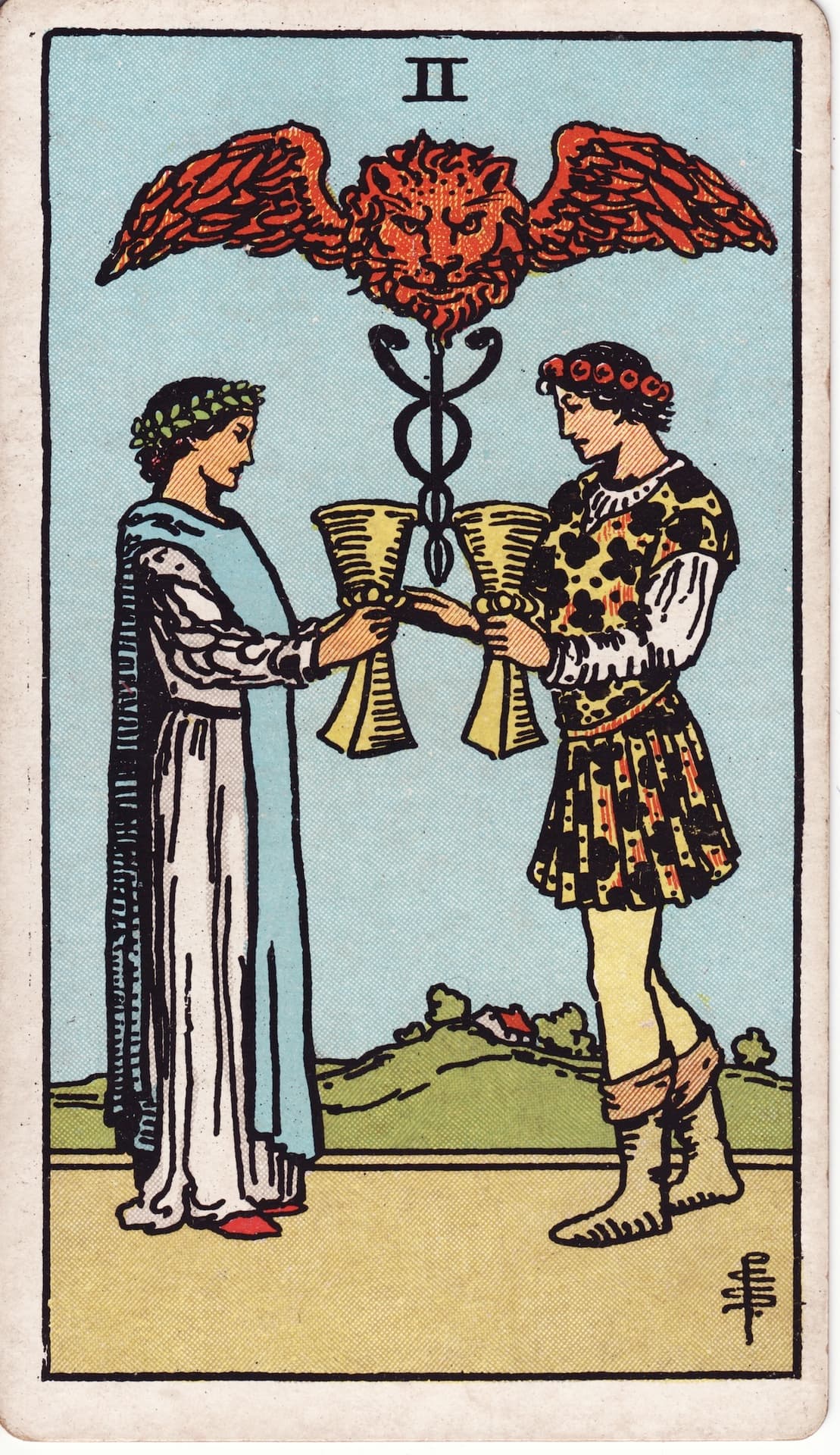
Two of Cups
Often in Connection or The other: upright is emotional reciprocity; reversed is off-rhythm or one person pulling back.

Ten of Cups
In Connection, upright hints long-term harmony and a “home” feeling; reversed flags family expectations out of sync with reality.
Look closer
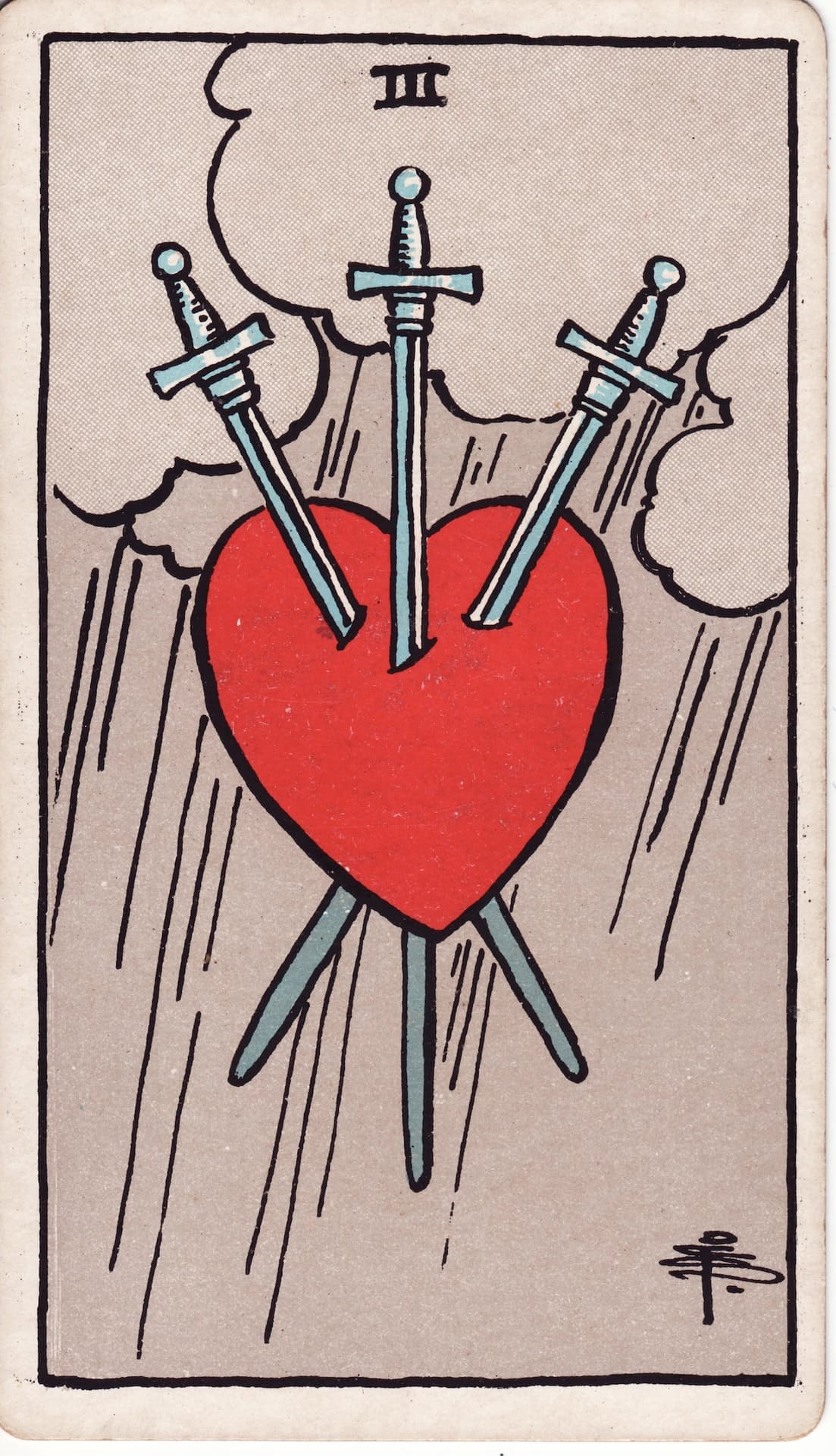
Three of Swords
Not “love is over”: in Connection it invites honest repair — real hurt, not a curse.

The Moon
In The other, often signals ambiguity — you may be guessing more than knowing; ask “What do I need to clarify?”.
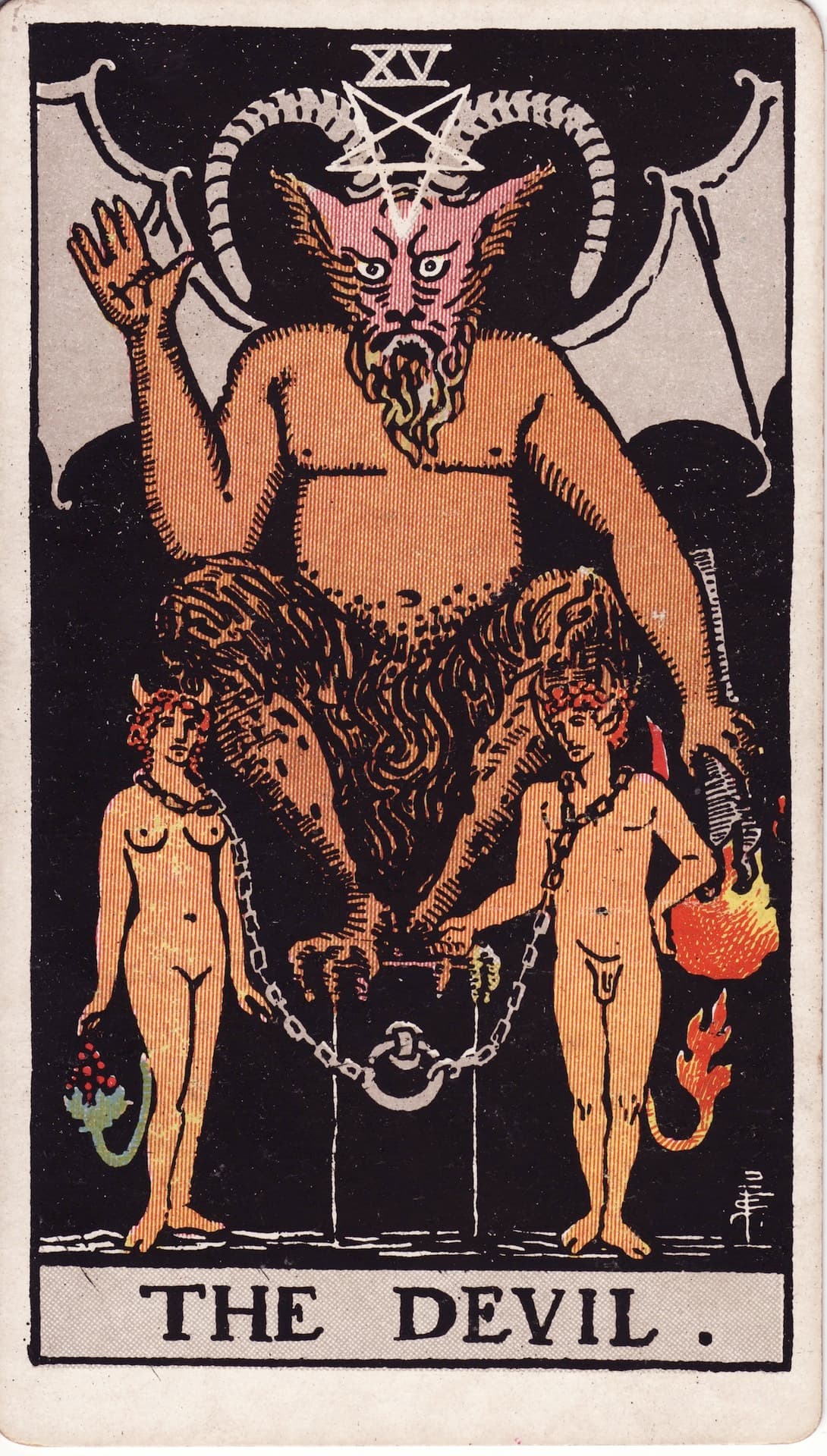
The Devil
In Connection, upright can be intense chemistry; reversed points to binding or dependency worth examining.
FAQ
Related articles
5 min
Tarot Love Reading Guide: From Question to Card
Explore the art of reading tarot for love, relationships, and important emotional decisions.
6 min
How to Ask Tarot Love Questions Effectively: 30 Sample Questions for Clear Answers
Sample tarot questions for love, relationship stages, and next steps.
4 min
Past–Present–Future Spread: A Reading Guide for Beginners
Past–present–future spread: positions, timeline, and next steps.
6 min
Reading Reversed Cards: Not Bad News — Three Ways to Understand Stuck or Skewed Energy
Reversed cards don't automatically carry negative meaning. They show how energy changes its expression — stuck, turned inward, or out of balance. Which interpretation fits depends on your question's context, the card's position, and the surrounding cards.